
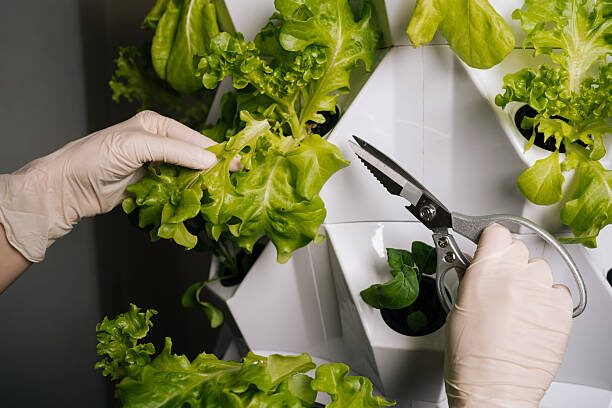
Honestly, the first time most people hear about an aeroponic tower, they picture something out of a sci-fi movie. Roots dangling in the air, no soil anywhere, plants climbing straight up a column. It looks a little strange. But here’s the thing: once you understand how it works, it turns out to be one of the simplest ways to grow fresh food at home.
If you don’t have a yard, or you just want to garden indoors, an aeroponic tower garden could be the easiest upgrade you make this year. Let’s walk through what it is, how it works, and what you can actually grow in one.
What Is an Aeroponic Tower?
An aeroponic tower is basically a vertical garden where the roots hang in the air instead of sitting in soil. Sounds odd, I know. But here’s how it works: a pump sends nutrient-rich water up to the top, it trickles down over the roots on its way back, and then it collects in a reservoir at the bottom, ready to go around again. Pretty clever, honestly. Think of it like a small fountain that happens to feed your lettuce.
Aeroponics is part of the hydroponics family, which simply means growing without soil. Other hydroponic methods, like deep water culture, keep roots sitting in water. With aeroponics, the roots are never submerged. They get a regular drip of nutrients and plenty of fresh air in between.
How an Aeroponic Tower Garden Works
Look, the whole thing is a lot less complicated than it sounds. A typical aeroponic tower garden has just a handful of parts:
• The reservoir. This sits at the base and holds your water and nutrients. A bigger reservoir means you’ll refill and change nutrients less often.
• The pump. It pushes the nutrient solution up through the tubing. Most home towers use a submersible pump that sits right inside the reservoir.
• The planting sections. Towers are built from stacked vertical sections, usually made from lightweight, food-grade plastic, with pockets for each plant.
• Timers. These handle your watering and lighting cycles, so you aren’t standing there with a watering can.
• LED grow lights. If your tower lives indoors, LED lights are the way to go because they’re easy to arrange along the full height of the tower and don’t use much electricity.
A good watering schedule to start with is 15 minutes on and 45 minutes off. As the weather warms up, you can water a bit more often. That’s really the entire routine.
Why People Love Growing With an Aeroponic Tower
So what’s the big appeal? Quite a few things, actually.
• Faster growth. Roots get more oxygen when they’re hanging in the air, and nutrients arrive directly at the roots. Studies have shown plants can grow up to three times faster than they do in soil.
• Less root rot. Root rot usually happens when roots can’t breathe because of too much water or poor drainage. Suspending roots in air virtually removes the problem.
• Serious water savings. Because the water keeps recycling, you can save up to 95% compared to traditional gardening, where most water is lost to runoff and evaporation.
• A small footprint. In less than one square meter, you can fit 24 pots or more. The same harvest in a regular garden bed would need a lot more ground.
• No mess. No soil means no dirt on your floor, no muddy footprints, and no bag of potting mix spilling in the corner. Honestly, that’s what makes growing indoors feel doable instead of messy.
What Can You Grow in an Aeroponic Tower?
More than you’d expect. Leafy greens like lettuce, kale, and mustard greens do really well, and so do herbs like basil and parsley. You can also grow tomatoes, cucumbers, peppers, and strawberries. Just keep in mind that tomatoes and cucumbers are vining plants, so they’ll need a trellis for support.
The one thing to skip is root vegetables. Carrots, potatoes, and onions grow downward and need room to expand, and there simply isn’t enough space inside the tower for them to reach full size.
Simple Tips to Keep Your Tower Healthy
You don’t need a green thumb, but a few easy habits go a long way:
• Check your pH weekly. The ideal range is 5.5 to 6.5. If it drifts outside that, your plants can’t absorb nutrients properly.
• Keep the pump covered. The pump should stay fully submerged, so top off the reservoir regularly.
• Pick a nutrient solution that dissolves easily. That way nothing builds up at the bottom of the tank.
• Get your lighting right. Run LED lights for 12 to 16 hours a day and keep them 6 to 10 inches from the top of the plant canopy.
• Watch the temperature. Plants are happiest between 65 and 78 degrees Fahrenheit, with humidity around 60%.
Is an Aeroponic Tower Right for You?
If you live in an apartment, have limited time, or have never grown anything before, probably yes. Because timers do most of the work, an aeroponic tower is a surprisingly forgiving way to start. It’s also a great fit for anyone who wants to grow indoors, and in dry regions where water is precious, recycling it is a real advantage.
You also know exactly how your food was grown. No herbicides, no pesticides, and no trucks hauling your salad across the country.
Ready to see what one looks like? You can explore the aeroponic tower from ALTO Garden, or learn more about how an aeroponic tower garden could fit into your home. Start small, set your timers, and enjoy the first harvest. It’s honestly a pretty great feeling.
