
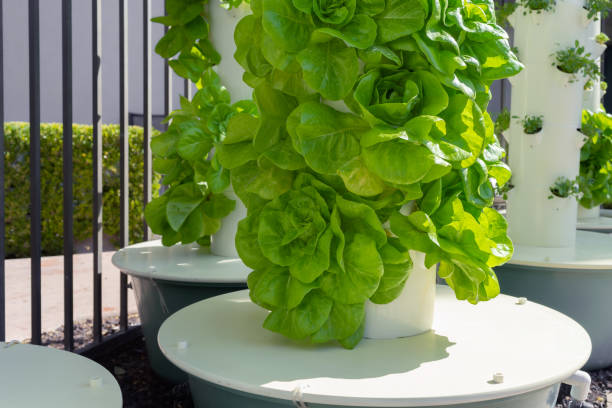
If you’re deciding between a classic garden bed and a garden tower, the real question is what you get for the space, water, and effort you put in. Here’s how the two compare, using the ALTO Garden GX Tower as the example.
Space: Growing Up Instead of Out
A head of lettuce in a traditional garden takes about one square foot of land. Garden towers grow vertically, so the same crop fits into a much smaller area. The GX Tower grows 24 heads of lettuce, or more, in under three square feet.
The tower stands 58″ x 20″ x 20″ without LED lights. It weighs 21 pounds empty, and the included wheels let you move it and rotate it at harvest. A garden bed stays where you dig it.
Water: Recycled Instead of Lost
Soil gardens waste most of their irrigation water. Only a small fraction gets absorbed by the roots, and the rest soaks into the ground. A garden tower works differently. A pump moves water from the reservoir to the top of the tower, it flows down past the roots, and it drains back to the reservoir to be used again.
That closed loop cuts water use by 95% compared to traditional soil gardens. The GX Tower’s reservoir holds 10 gallons, and a water gauge shows the level.
Growth: Direct Delivery to the Roots
In soil, roots have to search for nutrients. In a garden tower, water and nutrients reach the roots directly, so plants put more energy into growing. ALTO Garden says you can expect 3x faster growth and 30% greater yields.
Effort: Timers Instead of Daily Watering
A garden tower runs on a schedule. ALTO Garden suggests starting with 15 minutes of watering, followed by 45 minutes off, for 14 to 18 hours a day depending on temperature. Mature plants need less water than young ones, so you adjust as they grow. The tower is soil-free, so there’s no mess and no weeding.
You don’t need gardening experience either. Assembly takes about 20 to 30 minutes without tools, and the owner’s manual and videos walk you through it.
What the GX Tower Includes
Starting a traditional garden means buying soil, tools, and supplies separately. The GX Tower ships with what you need:
- Tower components and a reservoir tank with wheels
- Water pump and timer
- 24 net pots
- 30 rockwool cubes
- A and B plant nutrients, 10 oz each
- pH test pen
- Germination light
The tower has 24 pots across six layers, with four pots per layer. The pots sit 6.5″ apart, center to center, so plants have room to grow without competing for light and water. The walls are 2 mm thick, made from food-grade, BPA-free polypropylene, and each layer is a solid one-piece, 360-degree design to prevent leaks. A 1-year warranty covers parts and defects.
What Grows Well, and What Doesn’t
Garden towers handle leafy greens, herbs, and several fruiting plants well.
- Greens: lettuce, spinach, kale, chard, and bok choy
- Herbs: basil, parsley, cilantro, dill, thyme, and rosemary
- Fruiting plants: tomatoes, cucumbers, peppers, and strawberries
Root vegetables are the exception. Carrots, potatoes, and onions grow downward, which makes them hard to harvest from inside a tower. If those are your main crops, a soil bed still makes more sense.
Which One Should You Choose?
Choose a garden tower if space is tight, you want to save water, or you’d rather skip digging and weeding. Choose a traditional garden if you want to grow root vegetables or already have plenty of land.
The GX Tower without lights works outdoors or in an indoor spot with plenty of sun. If your indoor space is dim, ALTO Garden also offers a version with grow lights. The GX Tower (24 pot) costs $449 and comes with a 60-day risk-free trial.
Final Thoughts
A garden tower won’t replace every garden bed, but it wins on space, water, and upkeep. If you want fresh greens and herbs without the work of a soil garden, the GX Tower is a practical place to start.
