
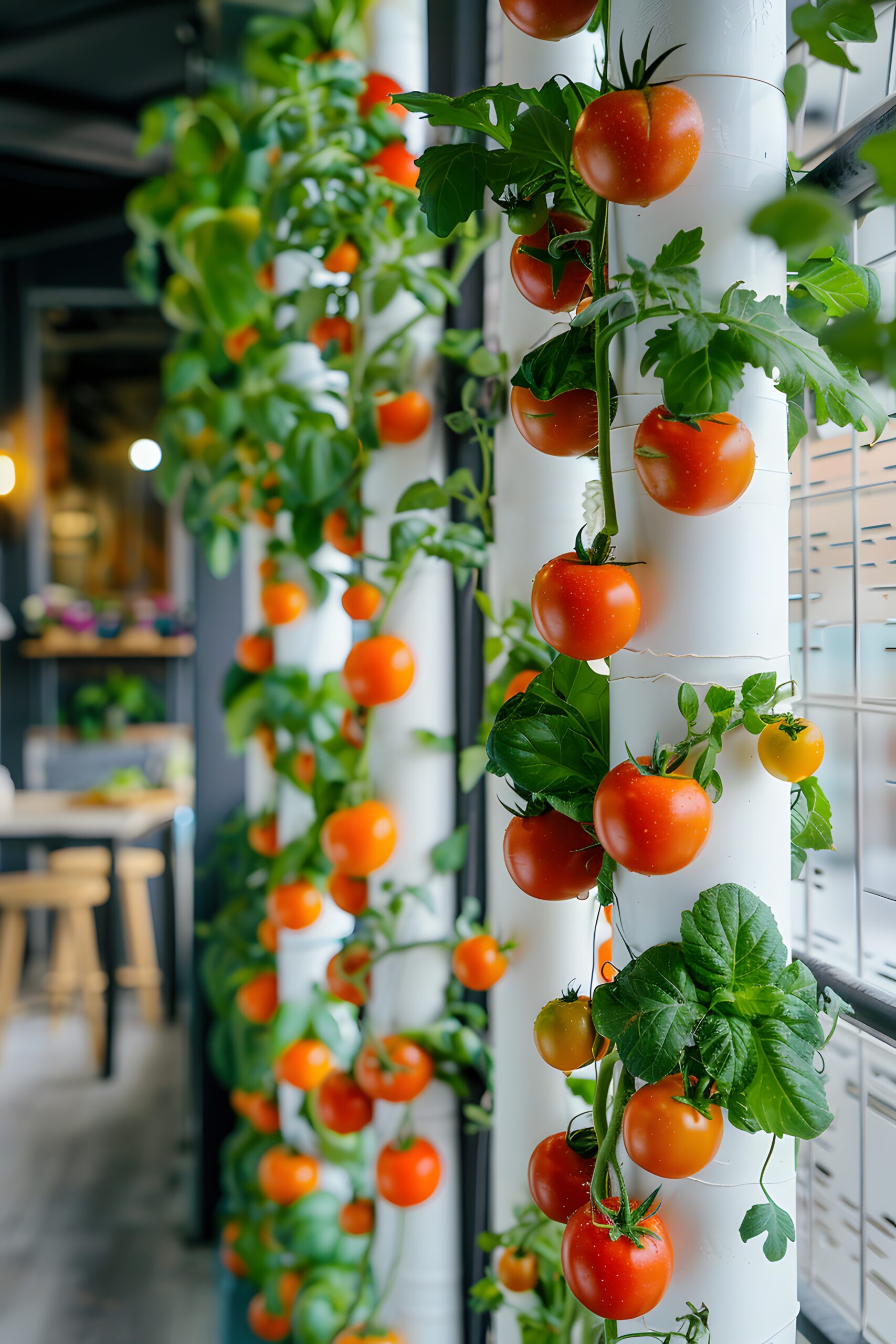
Traditionally gardening means soil, big growing spaces, regular watering and lots of sunshine. But today’s growing technology has changed what’s possible. Today, you can grow herbs, leafy greens, vegetables and even some fruits in compact spaces without traditional soil. One of the most novel approaches is an aeroponic tower, a vertical growing system that delivers water and nutrients directly to plant roots while exposing those roots to air.
If you are a homeowner, apartment dweller, urban gardener or just someone interested in sustainable food production, an aeroponic tower can be an efficient way to grow fresh produce. Aeroponics is a method of growing plants in a unique environment that combines vertical gardening, nutrient-rich water, oxygenating the roots and automated watering to encourage healthy plant growth.
What is Aeroponics Tower?
Aeroponic tower is a type of vertical gardening system that lets plants grow without the use of traditional soil. Instead, the plants are put in growing compartments around the tower, while their roots remain suspended inside the tower.
At the bottom there is a pot of water mixed with nutrients. The solution is pumped up to the top of the tower. The nutrient-rich water flows over the exposed roots before returning to the reservoir to repeat the cycle as it moves down through the system.
The main difference between aeroponics and many other growing methods is the amount of air that is surrounding the roots. In traditional soil gardening, roots are in the soil. In some hydroponic systems, the roots are kept either submerged in water or partially submerged. Aeroponics is when roots are suspended in air and sprayed with nutrient-rich water at timed intervals.
This combination of oxygen exposure and direct nutrient delivery is part of the reason that aeroponic systems are becoming so popular with modern gardeners.
How does the aeroponics tower system work?
The technology involved in an aeroponic tower is highly efficient, but the basic concept is simple.
It starts with a reservoir containing water and an appropriate nutrient solution. A pump then pumps the solution up to the top of the tower. Gravity pulls the water down, moistening and nourishing the roots of the plant as it goes.
The water returns to the reservoir after passing through the growing areas. You can then flow the same solution again through the system.
This closed-loop system greatly reduces water waste as compared to traditional gardening. ALTO Garden says that aeroponic systems can use significantly less water because the growing solution is recycled, rather than continually lost to soil. Timers can automate watering cycles. Rather than watering each plant by hand, the system can provide nutrient-rich water on a schedule. This is what makes an aeroponic tower very attractive for those who want a productive garden but do not want to spend hours a day doing maintenance.
Aeroponics vs Traditional Gardening –
One of the biggest differences between aeroponic gardening and traditional gardening is that there is no soil.
For plants in soil gardens, it is important that they develop root systems that can explore the growing medium for water and nutrients. An aeroponic system uses water to deliver nutrients directly to the roots.
The roots are also way more exposed to the air. Roots need oxygen to respire and aeroponic systems are designed to give roots more access to oxygen than they would normally get underground.
“Studies have demonstrated that aeroponically grown plants can grow up to three times faster than conventionally grown plants in soil,” ALTO Garden said, but actual growth rates vary depending on plant variety, environmental conditions, nutrients, lighting and system management.
That makes aeroponics an intriguing option for gardeners looking to experiment with faster growing, space-efficient food production.
Benefits of an Aeroponic Tower –
There are a number of reasons why gardeners are turning to vertical aeroponic systems.
1. Make the Most of the Space
Old-fashioned gardens are spread out sideways, needing room on the floor or ground. An aeroponic tower grows in a vertical manner, allowing many plants to be grown in a small footprint.
According to ALTO Garden, a typical tower system can hold 24 or more plants in less than a square meter of floor space.
This makes vertical gardening ideal for apartments, balconies, patios, kitchens and homes without traditional yards.
2. Improved Root Oxygenation
Plant roots require oxygen for healthy root respiration. In soil, oxygen supply may be limited by compaction or excessive wetness.
Aeroponic systems hang the roots in air, so they get more exposure to oxygen between watering cycles. Properly maintained, this can create a favorable environment for root development.
3. Direct Nutrient Supply
In soil gardening the nutrients must be present in the growing medium and then taken up by the roots. Aeroponics systems provide nutrients in water to exposed roots.
This enables the gardener to more accurately monitor and adjust the nutrient concentrations. Proper nutrient management helps plants to get what they need in terms of elements for the whole growth period.
4. Conservation of water
Another big plus is water efficiency. Rather than continuously watering the soil and having much of it run off or evaporate, an aeroponic tower recycles the growing solution.
ALTO Garden claims that up to 95% water can be saved compared to traditional gardening, under the described system and conditions.
This closed-loop approach can be particularly attractive to the gardener who wants to grow sustainably.
5. No soil necessary
Indoor gardening is far more sanitary and practical because an aeroponic tower does not require any soil.
Less soil will spill around the growing area and bags of potting soil do not need to be carried into the house. This makes tower systems attractive for kitchens, covered patios, balconies and other living spaces.
What Can You Grow in an Aeroponic Tower?
Aeroponic systems are capable of growing a wide variety of plants. Vertical tower gardening is particularly well suited to leafy greens and herbs.
Some common options include:
- Lettuce
- Kale.
- Spinach
- Mustard greens:
- Basil,
- Parsley
- Tomatoes
- Cucumbers
- Other vegetables & herbs
Tomatoes and cucumbers can be grown successfully in suitable tower systems, however, as vining plants they may require additional support e.g. a trellis. Root vegetables such as carrots, potatoes and onions are usually not ideal as the growing compartments do not give enough space for the roots to grow normally.
Starting with leafy greens and herbs can be practical for beginners, as leafy crops typically require less structural support than larger fruiting plants.
How to Use Grow Lights for Indoor Aeroponics
While an aeroponic tower can be used indoors, successful indoor gardening requires a lot of light.
You can use natural light in a sunny location but it’s not always possible to get enough illumination in indoor spaces during the whole day. LED grow lights might provide an alternative source of continuous light for plants.
Vertical LED lighting can be installed in a tower, illuminating a few levels of growth. If natural sunlight isn’t enough, ALTO Garden recommends using LED grow lights, noting that you can automate the lighting with timers.
Specific lighting requirements depend on the crop, growth stage, light intensity and growing environment. It’s important to watch how plants respond to see if lighting needs to be adjusted.
Maintaining an Aeroponic Tower
While aeroponic systems can automate many aspects of gardening, they still require constant tending.
To ensure the proper operation of the pump, the water levels need to be observed. The nutrient concentrations should also be kept according to the requirements of the plants grown.
PH is also another important consideration as plants have difficulty absorbing nutrients if the growing solution is not in an appropriate range. ALTO Garden suggests checking the pH regularly, with 5.5–6.5 being an ideal range, according to its aeroponic tower guide.
Keep the reservoir, pump, tubing and growing areas clean as well. Regular maintenance prevents build-up, and encourages a consistent flow of water.
Who is Aeroponic Gardening Good For?
An aeroponic tower could be a great fit for many different types of gardeners.
Apartment dwellers can use vertical systems when they don’t have a traditional yard. For busy homeowners automated watering and lighting schedules can be a boon. The technology enables novices to experiment with gardening without needing to learn conventional soil preparation.
Aeroponic towers can also be a helpful tool in areas where water conservation is necessary. These systems provide an alternative means of food production where traditional gardening is difficult or requires intensive water use through recirculation of water.
Aeroponic systems can be used by schools and educational programs to teach plant biology, root development, nutrition, sustainability, water conservation, and other concepts.
Aeroponics is more than just a handy way of growing a garden at home. They’re also looking at the principles that underlie it for challenging environments where traditional agriculture is hard.
Compact vertical systems are space-efficient, recycle water and don’t require large amounts of soil. These features make aeroponic concepts interesting for urban agriculture, controlled-environment farming, arid regions and even future space-based food production. ALTO Garden looks at NASA’s research into growing plants in space using aeroponics, where minimizing soil and managing water efficiency are crucial.
As the technology advances, automated gardening systems could become more available to home growers.
Conclusion
The aeroponic tower is a modern form of traditional gardening that grows vertically without soil and delivers nutrient-rich water directly to exposed roots. The oxygenated root environment, water circulation, vertical space usage, and automated watering are all reasons why it is attractive to the modern home gardener.
A variety of crops can be grown when the right growing conditions are provided, from leafy greens and herbs to tomatoes and cucumbers. An aeroponic tower can transform a small space into a productive garden with the right lighting, nutrients, pH management, water levels and regular maintenance.
Aeroponics is an exciting method to bring fresh food production closer to home for anyone interested in sustainable, space-efficient, and technology-driven gardening.
